

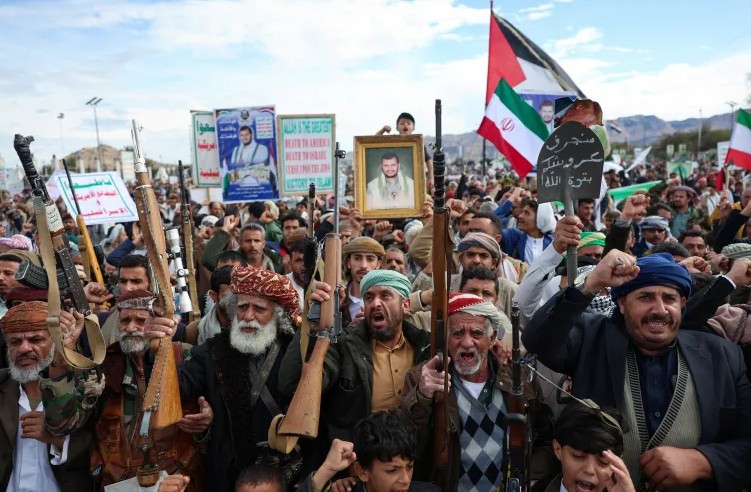


YEMEN — Yemen’s Houthi movement, officially known as Ansar Allah, has now openly entered the widening Iran war, launching missile attacks toward Israel and threatening to add another dangerous front to a conflict that was already reshaping the Middle East. The group’s move is significant not simply because it expands the battlefield, but because it ties one of the region’s most strategically placed armed movements to a war that is already disrupting energy supplies, drawing in multiple Iranian-aligned factions and testing Israel’s ability to manage simultaneous threats from several directions. Reuters and The Associated Press both reported Saturday that the Houthis confirmed they had fired on Israel for the first time in the current war, formally ending days of speculation over whether they would move from rhetoric to direct intervention.
The immediate military facts are still developing, but the broad outline is now clear. Israel said it detected a missile launch from Yemen early Saturday and moved to intercept it, while later reporting and Houthi statements indicated there had been additional attacks in less than 24 hours involving missiles and drones. The Houthis’ military spokesman, Yahya Saree, said the strikes were in response to what the group described as aggression against Iran and allied fronts across the region, and vowed that operations would continue. AP reported that Israel intercepted the first of the attacks and had not immediately confirmed the second, while Reuters said there were no immediate reports of casualties or damage from the initial strike.
That may sound like a limited opening salvo, but in regional terms it is a major escalation. Before this weekend, the Houthis had signaled they were prepared to enter the war if circumstances demanded it, including if other countries joined the fight against Iran or if the Red Sea were used as a launch platform for attacks on the Islamic Republic. Reuters reported on March 27 that the group said its “fingers” were on the trigger, and a day later it followed through. That sequence matters because it suggests the entry was not accidental or improvised, but part of a calibrated decision by an Iran-aligned movement that wanted to show it could widen the war without necessarily unleashing its full military potential all at once.
For Israel, the Houthi strikes are important both militarily and politically. Militarily, they add yet another direction from which long-range projectiles can reach Israeli airspace. Politically, they reinforce the message from Iran’s so-called Axis of Resistance that even if Israel and the United States are striking Iran directly, Tehran’s network still retains the capacity to activate partners in Yemen, Lebanon and Iraq. AP reported that Israeli forces are now preparing for what it described as a multifront war, while Reuters noted that Israel has regularly faced missile fire from Yemen before and therefore treats the Houthi front as a real, not hypothetical, threat.
Israel’s immediate response, at least publicly, has been defensive rather than retaliatory. The Israeli military intercepted the incoming missile and issued alerts, but there was no confirmed Israeli strike on Yemen in the immediate aftermath of the first launch in the reporting reviewed here. Instead, Israel continued broader operations against Iran and Hezbollah-linked targets as the wider war rumbled on. AP reported that Israel intensified airstrikes on Tehran and other Iranian military-linked sites, while Reuters described the Houthi missile as part of a much broader regional picture in which Israeli operations were still focused primarily on Iran and Lebanon. That restraint toward Yemen may or may not last, but at minimum it suggests Israeli planners are weighing whether to absorb an initial Houthi entry rather than immediately opening a full additional air campaign.
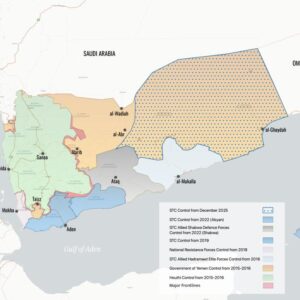
Even without an immediate Israeli strike on Yemen, the significance of the Houthi move is not hard to see. Ansar Allah controls much of northern Yemen, including the capital Sanaa, and has already demonstrated that it can launch missiles and drones far beyond Yemen’s borders. Reuters emphasized that the group can strike targets far from Yemen, and AP noted that its previous campaign in the Red Sea involved attacks on more than 100 merchant vessels between late 2023 and early 2025. In other words, Israel is not dealing with a militia that is locally disruptive but strategically contained. It is dealing with an actor that has already shown it can impose costs across a major commercial sea lane and can now once again aim directly at Israeli territory.
The reason Yemen matters so much is geography. Sitting on the southwestern edge of the Arabian Peninsula, Yemen overlooks the Bab al-Mandeb Strait, the narrow maritime gate connecting the Gulf of Aden and the Indian Ocean to the Red Sea and, beyond that, to the Suez Canal. AP reported that about 12% of world trade normally moves through this broader corridor, and Reuters has separately documented how carriers have increasingly avoided the Suez-Bab al-Mandeb route since the Houthis began targeting shipping in late 2023. In practical terms, that means Yemen is not just another battlefield. It is positioned beside one of the world’s most sensitive maritime chokepoints, where even a limited armed campaign can ripple through shipping schedules, insurance costs, fuel markets and consumer prices far beyond the Middle East.
That geographic leverage is precisely why Houthi intervention is so unsettling to governments and shipping companies. During the earlier Red Sea crisis, the group targeted merchant shipping, naval vessels and commercial tankers in and around the approaches to Bab al-Mandeb, prompting many carriers to reroute around the Cape of Good Hope instead of using Suez. Reuters reported this week that rerouting around Africa has become entrenched enough to boost bunkering activity in African ports, while AP said past Houthi strikes damaged more than 100 merchant vessels, sank two ships and killed four sailors. That history means the danger is not theoretical. The Houthis have already proved they can make the corridor commercially toxic even when U.S. and allied naval forces are present.
The importance of Bab al-Mandeb is magnified by what is happening elsewhere. Reuters has reported that the Strait of Hormuz, the conduit for about a fifth of global oil and liquefied natural gas supplies, has already been effectively shut by Iran during this war, creating what Reuters called the largest-ever disruption to global energy supplies. If Hormuz remains constrained while the Houthis turn Bab al-Mandeb into another active danger zone, the world would be looking at pressure on both the Gulf exit and the Red Sea approach at the same time. That dual threat is what makes Yemen’s location so consequential. A Houthi campaign near Yemen would not merely inconvenience shipping; it would compound an existing maritime and energy emergency.
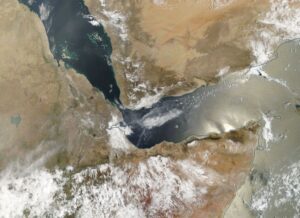
There is also a specific military logic to vessel attacks near Yemen. Ships transiting toward the Suez Canal must pass close enough to the Yemeni coast to remain exposed to anti-ship missiles, drones, explosive boats or attempted boarding operations. Reuters wrote earlier this week that if the Houthis opened a new front, one obvious target would be the Bab al-Mandeb Strait off Yemen’s coast. AP’s latest reporting echoes that concern, saying the Houthis’ entry into the war could further threaten global shipping because of the group’s history and its position near the strait. From a military standpoint, that gives the Houthis options even if they cannot “close” the waterway in a formal sense. They do not need to stop every ship. They need only create enough credible risk that shipowners, insurers and naval escorts conclude the passage is no longer worth the cost.
That is why analysts and officials tend to talk about maritime disruption in terms of economics as much as combat. A few attacks, or even a few credible threats, can drive up war-risk premiums, force convoys, delay cargo and push container lines and energy shippers onto longer routes. Reuters’ recent reporting on African bunkering hubs shows that many carriers had already adapted to avoiding the Red Sea after the earlier Houthi campaign. Any renewed Houthi assault on vessels near Yemen would therefore not be hitting a normal market; it would be striking a trade system already stressed by rerouting and by the wider war’s effect on oil and gas flows. That would be especially painful for Europe-bound commerce and for energy consumers already watching prices react to the conflict.
At the same time, the Houthis’ entry does not necessarily mean they will immediately devote their main effort to shipping. Reuters and other reporting suggest the group may be balancing competing pressures: the desire to show solidarity with Iran and reassert relevance on one hand, and the risk of triggering an overwhelming military response on the other. The Wall Street Journal’s live coverage, as summarized by the web tool, cited Yemeni analysts saying the initial attack looked limited and possibly calibrated to avoid provoking the strongest possible retaliation from the United States or Saudi Arabia. If that reading is correct, the first missile salvos toward Israel may have been designed as a signal: enough to mark entry into the war, not yet enough to unleash the full maritime crisis the group is capable of threatening.
Still, the risk of a harsher second phase is real. The Houthis have publicly tied their operations to the broader anti-Israel and anti-U.S. campaign across the region, and Reuters reported before Saturday’s attacks that the group was ready to intervene militarily if required. AP added that the Houthi move comes at a moment when the war has already spread into Lebanon, Iraq and the Gulf, with missile and drone strikes reported across several countries. In that environment, escalation can become less a matter of single decisions than of momentum. If Israel increases pressure on Iran, or if U.S. forces take on a larger role, the Houthis may calculate that attacks on vessels near Yemen offer them a relatively asymmetric way to impose international costs without having to match Israeli firepower in the air.
Israel’s strategic dilemma is therefore broader than simply stopping missiles from Yemen. It must now decide whether the Houthi front is best handled as an air-defense problem, a deterrence problem or part of a wider anti-Iran campaign. Intercepting missiles protects civilians and buys time, but it does not remove launch sites in Yemen. Striking Yemen could impose costs on the Houthis, but it would also open yet another active theater and could trigger renewed maritime attacks. AP noted that a previous U.S.-Israel air campaign against the Houthis devastated parts of the group’s leadership and military infrastructure, but the present attack shows the movement still retains both reach and intent. That reality suggests Israel and its partners are confronting not a clean military fix, but a persistent strategic contest over deterrence, escalation and sea-lane security.
There is also the regional political layer. Yemen’s internationally recognized government condemned the Houthi decision and said war-and-peace decisions belong to the Yemeni state, not an armed movement aligned with Iran. That condemnation, cited in the Wall Street Journal summary returned by the web tool, underscores a wider problem in the region: Iran-aligned armed groups can drag fractured states into wider confrontations regardless of the views of formal governments. In Yemen’s case, that means a country already devastated by years of civil war could once again become central to an international crisis because the actors who control its most strategically important territory are not the same actors recognized as its government.
For commercial shipping, the most important takeaway is straightforward. The Houthis’ entry into the Iran war makes the waters around Yemen more dangerous even before any vessel is struck. The combination of proven Houthi capability, direct attacks on Israel, public threats of continued operations, and Yemen’s position by Bab al-Mandeb is enough on its own to force shipowners and insurers to reassess exposure. Reuters has already shown that many carriers treat the Red Sea route as compromised when the Houthi threat rises. If the current war continues to spread, attacks on merchant vessels near Yemen are no longer a side concern. They are one of the clearest pathways by which a regional war can rapidly become a global economic event.
What happened Saturday, then, was more than another missile alert. It was the formal opening of a Yemeni front in a war that had already become regional, and it put one of the world’s most strategically located armed movements back into a position to shape both military and commercial traffic across the Middle East. Israel has so far answered with interceptions and continued pressure on its main adversaries elsewhere, but the next phase may depend less on one successful missile defense than on whether the Houthis decide to widen their target set from Israeli territory to the crowded sea lanes near Yemen. If they do, the geography of Yemen — long central to regional strategy but often overlooked in wider war coverage — could suddenly become one of the most important factors in the conflict.