

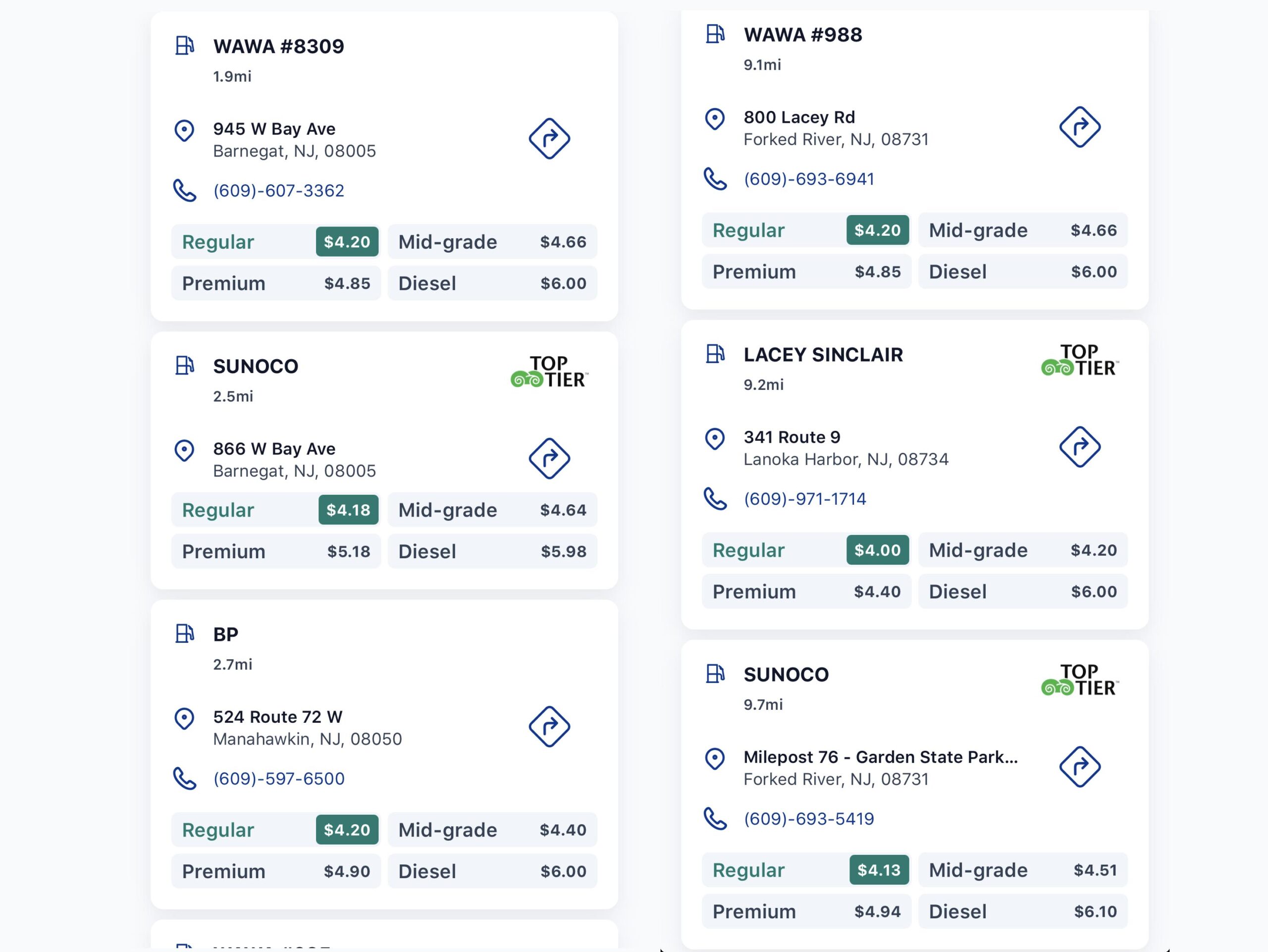


New Jersey’s latest gas-price spike is not just a routine seasonal increase. It is being driven by a war-linked global oil shock, and the numbers show how quickly that shock is reaching consumers. AAA reported Saturday that New Jersey’s average regular price reached $4.082, up from $3.875 a week ago and $3.083 a month ago.
The root of the problem is the Strait of Hormuz. Reuters reported that about a fifth of the world’s oil supply and much of its fertilizer supply has been effectively blocked or disrupted there since the war intensified. That disruption has helped push oil to around $110 a barrel, while J.P. Morgan told Reuters there is a risk oil could jump to $120 to $130 in the near term and above $150 if supply flows remain disrupted into mid-May.
In a normal market, New Jersey drivers might still see some spring price increases as demand improves and summer fuel blends begin to enter the market. But the current rise is happening on top of a geopolitical price shock, which is why it has been so abrupt. Reuters reported on March 1 that analysts warned gasoline would rise after the attack on Iran, and those forecasts have now largely materialized.
New Jersey is also highly exposed because it is densely populated, heavily commuter-oriented and deeply tied to freight and tourism. A recent ROI-NJ report citing outside analysis said New Jersey is one of the most vulnerable states to gasoline price shocks, estimating that a 50-cent spike would add roughly $1.68 billion in annual statewide fuel costs and a $1 jump would add about $3.37 billion. While that study predates today’s specific price print, it helps illustrate why rapid jumps matter so much in this state.
Unless the war de-escalates or oil routes normalize, New Jersey’s price problem is unlikely to fade quickly. The current run-up is being driven by the same forces that are pushing up inflation fears, bond yields and mortgage rates across the country.