



Overview
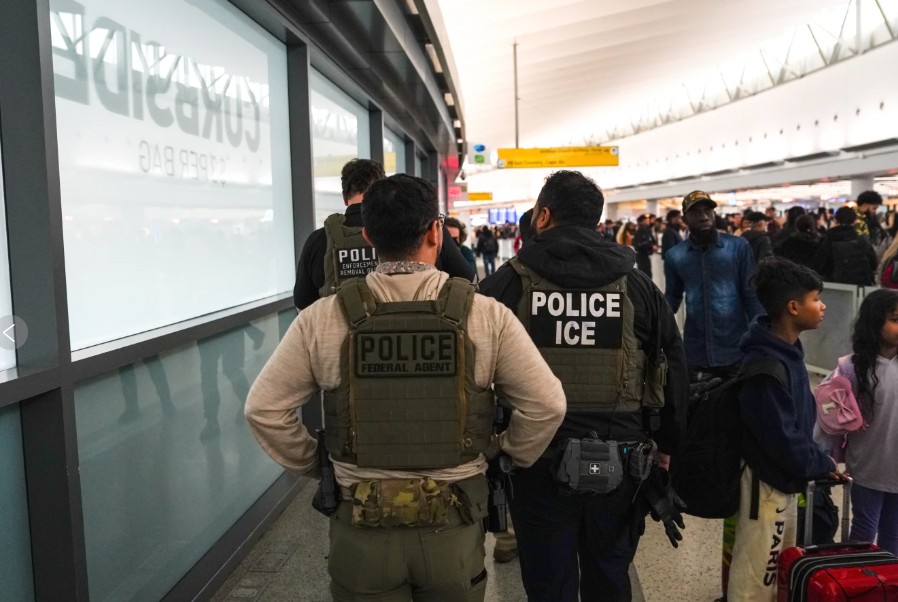
Federal immigration agents were deployed Monday to multiple U.S. airports—reportedly up to 14 locations—according to statements from the White House’s border czar, as the federal government grapples with a prolonged Department of Homeland Security (DHS) funding lapse that has strained airport operations nationwide.
The move comes as Transportation Security Administration (TSA) staffing shortages have led to long lines, delays, and mounting concerns about travel disruptions.
Full Story
WASHINGTON — Immigration and Customs Enforcement (ICE) agents were deployed Monday to a number of major U.S. airports, a move federal officials say is intended to help stabilize airport operations amid widespread staffing shortages tied to an ongoing DHS funding lapse.
White House border czar Tom Homan said up to 14 airports nationwide were expected to receive ICE personnel, marking an unusual expansion of the agency’s visible role in domestic airport operations.
The deployments come as TSA checkpoints across the country have experienced significantly increased wait times, with some travelers reporting hours-long delays.
Why ICE Agents Are at Airports
Federal officials say the presence of ICE agents is not related to immigration enforcement at checkpoints, but rather to assist with operational support.
According to administration statements, ICE officers are being assigned to roles that do not require specialized TSA screening certification, including:
Crowd control and line management
Monitoring entry and exit points
Checking identification prior to screening areas
Officials emphasized that ICE agents are not operating X-ray machines or conducting security screenings, which remain the responsibility of trained TSA personnel.
The goal, according to federal leadership, is to free up TSA officers to focus on core screening functions.
TSA Staffing Shortages Drive the Decision
The deployment is closely tied to the ongoing partial federal government shutdown affecting DHS, which began in mid-February and has left tens of thousands of TSA employees working without pay.
Since the funding lapse, officials have reported:
Hundreds of TSA officers resigning or calling out
Increased absenteeism at major airports
Growing wait times across multiple regions
ICE, by contrast, has continued to receive funding under prior appropriations, allowing the agency to maintain staffing levels during the shutdown.
Federal authorities have framed the deployment as a temporary measure to maintain continuity in air travel operations.
Airports Affected
While federal officials have not released a full official list of locations, multiple reports indicate ICE agents were seen or expected at major airports including:
- Hartsfield-Jackson Atlanta International Airport
- John F. Kennedy International Airport
- Newark Liberty International Airport
- George Bush Intercontinental Airport
Additional reports suggest deployments in cities such as Chicago, Philadelphia, Phoenix, and San Juan, among others.
Officials have declined to publicly confirm all locations, citing security considerations.
Federal and Political Context
The deployment is unfolding against a backdrop of broader political conflict in Washington over immigration policy and federal funding.
The DHS funding lapse stems from disagreements in Congress over immigration enforcement provisions, including policies tied to ICE and Customs and Border Protection.
At the same time, recent federal immigration enforcement actions—particularly a controversial operation in Minneapolis involving fatal shootings—have intensified political tensions and contributed to the funding impasse.
The administration has indicated that using ICE personnel at airports is part of a broader effort to maintain essential services during the shutdown.
Public Reaction and Concerns
The presence of immigration agents at airport checkpoints—traditionally staffed by TSA—has prompted mixed reactions.
Supporters of the move argue that:
- It provides an immediate solution to staffing shortages
- Helps prevent further delays during peak travel periods
- Maintains operational continuity during a shutdown
Critics, however, have raised concerns about:
The optics of immigration enforcement personnel in civilian travel settings
Potential confusion among travelers
Broader implications for the role of federal law enforcement agencies
Civil liberties advocates have also questioned whether the deployment could blur the line between security screening and immigration enforcement, though officials have repeatedly stated that ICE agents are not conducting enforcement actions at checkpoints.
Travel Impact Continues
Despite the additional personnel, airport disruptions are expected to continue in the near term.
TSA officials have warned that prolonged staffing shortages could:
- Lead to continued delays
- Impact flight schedules
- Strain airport infrastructure
Travelers have been advised to arrive early and prepare for extended wait times, particularly at major hubs.
What Comes Next
The ICE deployment is widely viewed as a temporary measure tied to the current funding situation.
Its duration will likely depend on:
- Whether Congress reaches a DHS funding agreement
- The ability of TSA to stabilize staffing levels
- Ongoing travel demand as the spring season approaches
For now, federal authorities say ICE agents will remain in place as needed to support airport operations.
Bottom Line
The deployment of ICE agents to up to 14 U.S. airports marks a significant and highly visible response to growing travel disruptions tied to the federal funding standoff.
While officials describe the move as operational support rather than enforcement, it underscores the broader strain on federal infrastructure—and the increasingly direct impact of political gridlock on everyday travel.
As the situation evolves, both the scope and public response to the deployment are expected to remain under close scrutiny.