

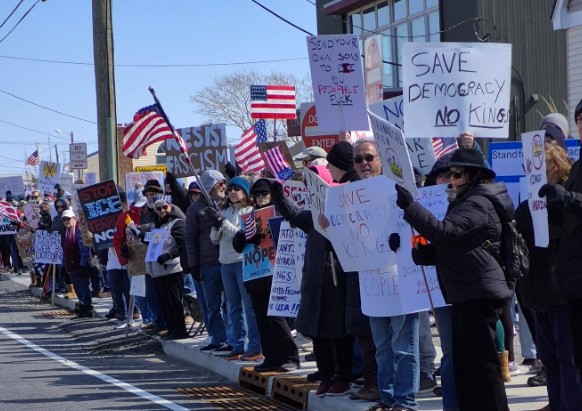


OCEAN COUNTY, N.J. — From the streets of Washington, D.C., to small towns along the Jersey Shore, a new wave of “No Kings” protests is unfolding across the United States this weekend, drawing large crowds, energizing grassroots organizers, and bringing a distinctly local voice to a rapidly expanding national movement.
What began as a loosely organized response to concerns over executive power and federal policy has evolved into one of the most widespread protest mobilizations in recent years. On Saturday, March 28, demonstrators gathered in thousands of locations nationwide, united by a common message: that democratic governance must remain rooted in accountability, not concentrated authority.
Across the country, scenes were both familiar and striking. In cities and towns alike, participants lined sidewalks, gathered in parks, and marched through downtown corridors carrying handmade signs, American flags, and messages calling for civic engagement. In places like Manistee, Michigan, hundreds of residents braved cold temperatures to stand shoulder to shoulder along major roadways, part of a coordinated day of action that organizers say included more than 3,000 events nationwide.
Organizers estimate that millions of Americans could take part in this latest round of demonstrations, building on earlier waves in 2025 that drew several million participants and marked some of the largest coordinated protests in modern U.S. history.
The movement itself is deliberately decentralized. Led in part by national organizing networks such as Indivisible and the broader “50501” coalition, “No Kings” operates without a single central leadership structure. Instead, it empowers local groups to plan events tailored to their communities while aligning around shared themes—defending democratic norms, expressing opposition to certain federal policies, and encouraging participation in the political process.
That approach has allowed the protests to spread far beyond traditional political hubs. While large metropolitan areas remain focal points, one of the most notable developments this weekend is the expansion into suburban and coastal communities, including those along the Jersey Shore.
A National Movement, A Local Voice
The issues driving the protests vary from place to place but are tied together by a broader narrative of civic engagement. Nationally, participants have pointed to concerns about immigration enforcement, foreign policy decisions, and what they describe as an erosion of institutional checks and balances.
In many communities, the protests have taken on a distinctly local character. Events have included speeches from community leaders, voter registration drives, donation efforts, and calls for continued civic involvement beyond the rallies themselves. In Illinois, for example, organizers incorporated community donation drives into their demonstrations, blending activism with direct local support efforts.
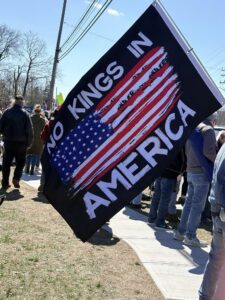
That blending of national message and local action has become a defining feature of the movement. Rather than focusing solely on Washington, the protests are bringing political conversation into neighborhoods, town centers, and regional gathering places.
Participants interviewed at rallies across the country emphasized a sense of shared purpose. Some described the demonstrations as a way to be heard in a polarized political environment, while others framed them as a reaffirmation of democratic values.
At the same time, the protests have drawn criticism from some political leaders and organizations, who argue that the movement is politically motivated or lacks clear policy goals. National Republican groups have dismissed the demonstrations as partisan, while some analysts have questioned whether the movement’s broad messaging will translate into concrete political outcomes.
Organizers, however, have pushed back on that characterization, arguing that the goal is not a single policy demand but sustained civic engagement. They point to the growing turnout and geographic reach as evidence that the movement is resonating with a wide range of Americans.
The scale of the March 28 demonstrations reflects months of organizing and a steady build in momentum. The “No Kings” movement first gained national attention in 2025, when protests were held in conjunction with major political events and policy debates. Since then, it has expanded through social media networks, local organizing groups, and partnerships with advocacy organizations.
By early 2026, organizers were planning what they described as the largest coordinated day of action yet. The result is a nationwide network of events that includes major rallies in cities like Washington, Boston, and Chicago, as well as smaller gatherings in suburban communities and rural areas.
In Washington, demonstrators gathered near the National Mall, carrying signs and chanting slogans that echoed across the capital. In other parts of the country, protests took place along highways, in public squares, and outside government buildings, creating a patchwork of activity that collectively formed a national moment.
The movement has also extended beyond U.S. borders, with demonstrations planned in several countries, reflecting its growing international visibility.
For many participants, the decentralized nature of the protests is part of their appeal. It allows individuals to engage in a way that feels meaningful within their own communities while still contributing to a larger national effort.
Ocean County Joins the Movement
In Ocean County, that national energy is being felt on a local level, with multiple “No Kings” protests scheduled across the region, including in Toms River, Lakewood, and along Long Beach Island.
One of the central gatherings is taking place in Toms River, where organizers have invited residents to assemble outside the Veterans Affairs Clinic on Hooper Avenue. The location, a highly visible corridor in the township, reflects an effort to bring the message directly into the community’s daily life.
The Toms River rally is scheduled to run from noon to early afternoon, aligning with events taking place simultaneously across the country. Organizers have emphasized that the demonstration is intended to be peaceful and community-focused, encouraging participants to engage respectfully and responsibly.
Just west of Toms River, another gathering is planned in Lakewood along Route 70, a busy thoroughfare that offers high visibility for demonstrators and passing motorists alike. Together, these events represent a coordinated local effort to participate in the broader national movement.
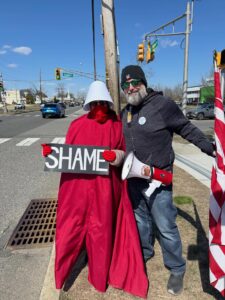
Further south, on Long Beach Island, a separate protest is scheduled in Ship Bottom, bringing the movement to one of the Jersey Shore’s most recognizable coastal communities. Organizers say the event will take place near the entrance to the island, creating a visible presence for both residents and visitors traveling through the area.
The inclusion of Long Beach Island is particularly notable, reflecting how the movement has reached beyond urban centers into seasonal and coastal communities that are not typically associated with large-scale protests.
Local organizers describe the Ocean County events as an opportunity for residents to come together, share perspectives, and participate in a broader conversation about the direction of the country.
In Toms River and across the region, participants are expected to include a mix of longtime activists, first-time demonstrators, and residents who simply want to observe or engage in dialogue. The atmosphere, organizers say, is intended to be inclusive and welcoming, with a focus on peaceful expression and community connection.
At the same time, the events are expected to draw attention from across the community, including those who may not agree with the movement’s message. In some cases, counter-events or differing viewpoints have been expressed, reflecting the broader diversity of opinion within Ocean County.
Local officials have not announced any major disruptions or restrictions related to the protests, though standard public safety measures are expected to be in place. Law enforcement agencies typically monitor such events to ensure that they remain peaceful and that traffic and public access are maintained.
As the “No Kings” protests unfold, Ocean County finds itself part of a larger national narrative—one that is defined not only by its scale but by its ability to connect communities across geographic and cultural lines.
From the National Mall to the sidewalks of Toms River, from Midwestern highways to the beaches of Long Beach Island, the demonstrations represent a shared moment of civic engagement, where local voices contribute to a broader conversation about governance, accountability, and the future of the country.
For residents of the Jersey Shore, the protests offer a chance to participate in that moment without leaving their communities. Whether standing along Hooper Avenue, gathering on Route 70, or assembling in Ship Bottom, participants are adding their voices to a chorus that spans the nation.
As the day unfolds, the full impact of the demonstrations will become clearer—measured not only in turnout but in the conversations they spark and the connections they create.
For now, the message from Ocean County mirrors the one heard across the country: a call for engagement, a commitment to peaceful expression, and a belief that every community has a role to play in shaping the national dialogue.