

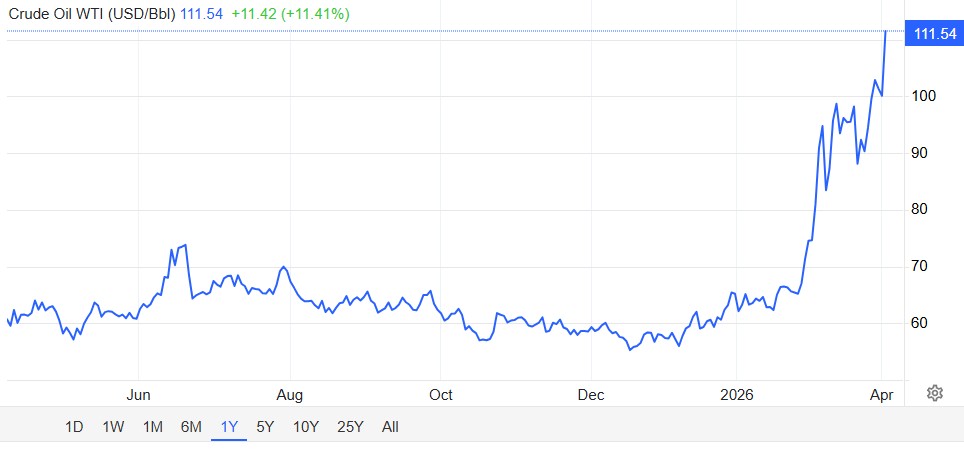


The energy shock tied to the Iran war could still get significantly worse. Reuters reported that J.P. Morgan warned oil could rise to $120 to $130 in the near term and could surge above $150 a barrel if disruptions through the Strait of Hormuz last into mid-May. Reuters also reported that International Energy Agency chief Fatih Birol described the current Gulf supply crisis as worse than the oil shocks of 1973 and 1979 and the Russian gas disruption after the Ukraine invasion, combined.
That is the kind of forecast New Jersey households and businesses cannot ignore. AAA already shows regular gasoline in the state above $4.08 a gallon and diesel at $5.88, and those numbers reflect today’s market, not a scenario where oil jumps another $20 to $40 a barrel.
Higher oil prices do not just mean costlier fill-ups. They affect shipping, home services, trucking, food distribution, aviation, construction inputs and the broader inflation outlook. Reuters reported that higher oil and fertilizer prices are already feeding inflation concerns and pushing up Treasury yields, which in turn are lifting mortgage rates.
For New Jersey, the exposure is broad because the state depends on both commuting and visitor traffic. It also sits inside a regional economy where trucking, warehousing, tourism and hospitality are tightly connected. If oil prices remain elevated long enough, the effect is likely to spread from drivers to restaurants, retailers, lodging businesses and local governments. That last point is an inference from the market channels Reuters and state tourism data describe, but it is a reasonable one.
The warning sign here is not only what prices are today. It is how much higher they could go if the war continues to choke one of the world’s most important energy routes.