

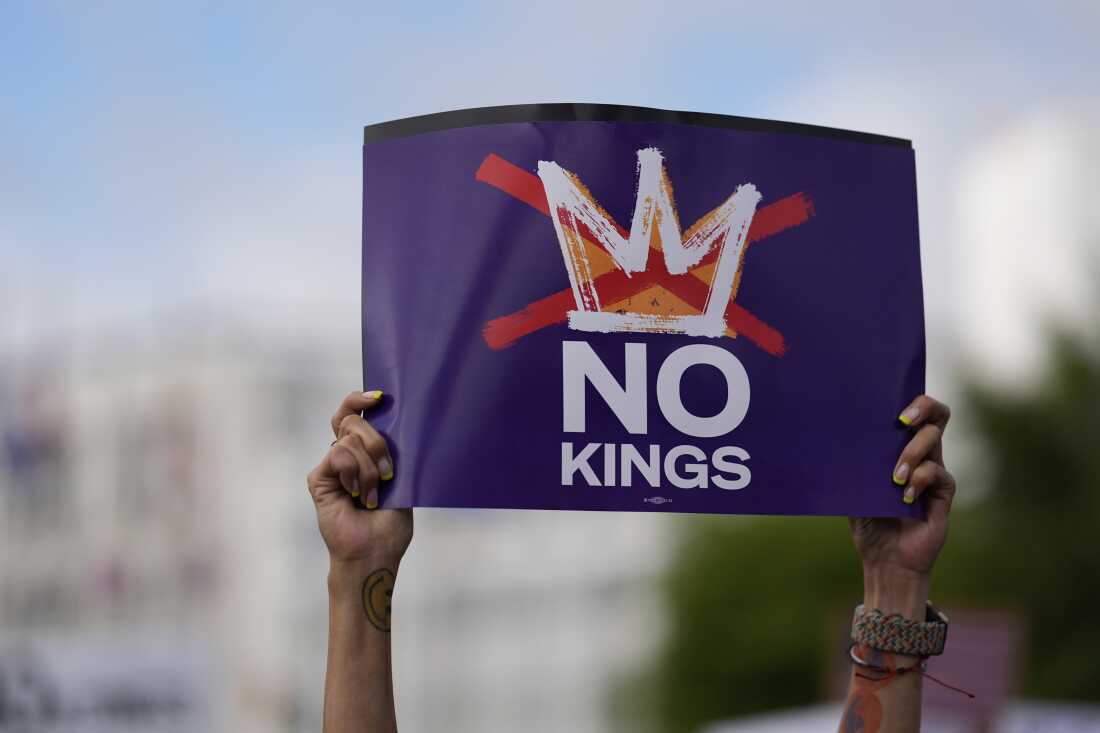


OCEAN COUNTY, N.J. — A wave of coordinated protests tied to the growing “No Kings” movement is set to reach the Jersey Shore this weekend, with multiple demonstrations planned across Ocean County as part of what organizers say could become one of the largest single-day protest mobilizations in U.S. history.
Locally, rallies are scheduled in communities including Toms River, Lakewood, and Long Beach Island, reflecting how a movement that began in major metropolitan areas has steadily expanded into suburban and coastal regions of New Jersey. The demonstrations are expected to coincide with thousands of similar events nationwide on March 28, underscoring the rapid growth of a decentralized protest network that has emerged in response to policies of the Trump administration and broader concerns about federal authority.
According to local event listings and regional reporting, one of the central Ocean County gatherings is planned outside the Veterans Affairs Clinic on Hooper Avenue in Toms River, with additional demonstrations scheduled along Route 70 in Lakewood and in Ship Bottom on Long Beach Island. Organizers say the events are intended to be peaceful, nonviolent assemblies designed to encourage civic engagement while allowing residents to express concerns about issues ranging from immigration enforcement to economic policy and federal decision-making.
The local events mirror the structure of the broader “No Kings” movement, which deliberately operates without a centralized leadership hierarchy. Instead, it relies on a network of grassroots organizations, advocacy groups, and community volunteers to coordinate demonstrations at the local level while aligning around shared themes of democratic accountability and opposition to what participants describe as expanding executive power.
That structure has allowed the movement to grow rapidly. National organizers say more than 3,000 events are planned across the United States and in several other countries, with participation expected to reach into the millions. Previous iterations of the protests in 2025 drew between five and seven million participants nationwide, making them among the largest coordinated demonstrations in modern American history.
The expansion into Ocean County reflects a broader shift in where political activism is taking place. While earlier waves of “No Kings” protests were concentrated in major cities, recent organizing efforts have focused on suburban and traditionally less politically active regions, including parts of South Jersey. Analysts and organizers alike point to this geographic spread as evidence of increasing engagement among communities that have historically been less visible in large-scale protest movements.
In Ocean County, organizers say turnout expectations are difficult to predict but anticipate a noticeable presence given the visibility of the issue and the region’s growing political engagement in recent election cycles. The choice of locations—such as highly trafficked corridors in Toms River and Lakewood—suggests an emphasis on visibility and accessibility, allowing both participants and passersby to engage with the demonstrations.
The movement itself traces its origins to early 2025, when a coalition of progressive organizations began organizing protests under the “No Kings” banner in response to what they described as authoritarian tendencies in federal governance. The name reflects a rejection of centralized power, drawing on historical references to the American Revolution and the principle that no individual should hold unchecked authority.
Over time, the movement has expanded its focus to include a wide range of issues, including immigration enforcement practices, voting rights, economic inequality, and foreign policy decisions. The March 28 demonstrations are expected to reflect that broad scope, with participants highlighting different concerns depending on their local context.
In Ocean County, some organizers have indicated that immigration enforcement and federal policy decisions will be among the central themes, aligning with national messaging that has increasingly focused on recent ICE operations and related controversies. At the same time, local participants are expected to bring their own perspectives to the rallies, addressing issues that directly affect their communities.
The decentralized nature of the movement means that each local event can take on a distinct character. In Toms River, for example, organizers have emphasized accessibility and community participation, encouraging residents to register in advance so that logistical updates can be shared and accommodations arranged. On Long Beach Island, organizers have framed the demonstration as part of a broader effort to engage coastal communities in national conversations about governance and policy.
Despite the movement’s rapid growth, it has also drawn criticism from some quarters. Analysts have noted that the lack of a unified leadership structure and clearly defined policy platform could limit its ability to translate large-scale mobilization into concrete political outcomes. Others argue that the broad range of issues represented within the movement may dilute its message, making it more difficult to achieve specific legislative or policy goals.
Organizers, however, have defended the approach, arguing that the movement’s strength lies in its inclusivity and flexibility. By allowing participants to engage on a wide range of issues, they say, the movement can build a broader coalition and sustain long-term engagement beyond individual protest events.
That philosophy appears to be resonating in communities like those in Ocean County, where local organizers have emphasized the importance of continued involvement after the demonstrations conclude. Many have framed the rallies not as an endpoint but as part of an ongoing effort to increase civic participation, encourage dialogue, and influence future elections.
The timing of the protests also carries significance. Coming amid a series of high-profile national debates—including ongoing discussions about immigration policy, federal authority, and international conflict—the demonstrations are expected to serve as a visible expression of public sentiment at a moment of heightened political tension.
Nationally, the March 28 events are being described by some organizers as potentially the largest coordinated protest effort to date, surpassing previous “No Kings” gatherings in both scale and geographic reach. The flagship event is expected to take place in Minnesota, but the movement’s emphasis on local action means that smaller communities, including those in Ocean County, are seen as equally important components of the overall effort.
Local officials in Ocean County have not announced any major restrictions or changes in response to the planned demonstrations, though standard public safety measures are expected to be in place. In other parts of the country, law enforcement agencies have issued guidance to ensure that protests remain peaceful and compliant with local regulations, reflecting a broader emphasis on maintaining order while respecting the right to assemble.
For many residents, the upcoming rallies represent an opportunity to engage directly with national issues in a local setting. Whether through participation or observation, the events are likely to draw attention and spark conversation across the region.
At the same time, the protests are expected to highlight the evolving nature of political engagement in the United States. The rise of movements like “No Kings” reflects a shift toward decentralized, digitally coordinated activism, where local actions are connected through national networks but retain their own unique identities.
In Ocean County, that dynamic will be on display as residents gather in Toms River, Lakewood, and along Long Beach Island, joining thousands of others across the country in a coordinated day of action. For organizers, the goal is not only to make a statement but to build momentum for future efforts, creating a sustained presence that extends beyond a single day.
As the weekend approaches, attention will be focused not only on turnout but on the broader impact of the demonstrations. Whether the “No Kings” movement can translate its growing visibility into lasting political influence remains an open question, but its expansion into communities like those along the Jersey Shore suggests that its reach—and its relevance—continue to grow.
For now, Ocean County is preparing to take its place within a national moment of protest, where local voices will contribute to a larger chorus calling for change, accountability, and a renewed conversation about the direction of the country.