

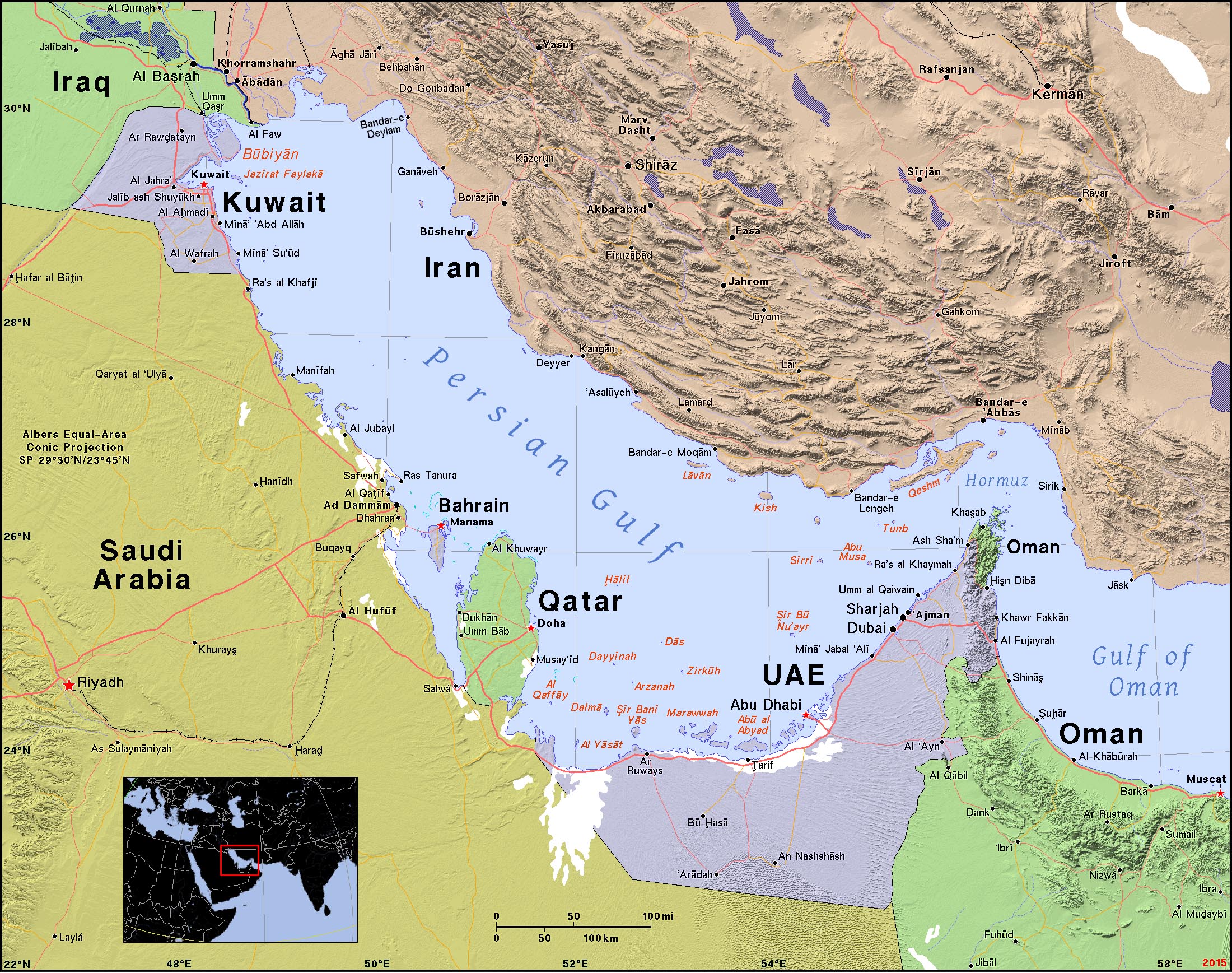


Recent reporting points to a real but only partly quantified U.S. pullback and dispersal from some Arabian Gulf bases, not a full regional withdrawal. The clearest confirmed piece is a Reuters report from January 14 saying the United States was withdrawing some personnel from key Middle East bases as a precaution after Tehran warned neighboring states hosting U.S. troops they could be hit if Washington struck Iran. Reuters did not publish a number of personnel withdrawn and did not identify the exact bases in that initial precautionary move.
What has become clearer in the last several days is that Iranian retaliation has forced a broader dispersion of U.S. forces away from some fixed installations in the Gulf. A New York Times report summarized by Anadolu said thousands of U.S. troops have been moved into hotels and temporary operating sites after repeated Iranian attacks damaged multiple American facilities. That same summary said several bases, “particularly in Kuwait,” were left nearly uninhabitable, and named Ali Al Salem and Camp Buehring in Kuwait, Al Udeid in Qatar, and Prince Sultan in Saudi Arabia as bases that sustained extensive damage. Anadolu, citing the Times, also said the damage included harm to aircraft, fuel infrastructure, and communications facilities. Because that account is secondhand rather than a direct U.S. official release, I would treat the named-base list as strong reporting but still not a fully official Pentagon inventory.
On the equipment side, the most specific recent public reporting concerns Prince Sultan Air Base in Saudi Arabia. Reuters reported that an Iranian strike there wounded 12 U.S. troops, two of them seriously. AP separately reported that recent attacks on Prince Sultan involved missile and drone strikes that damaged refueling aircraft, and said a prior strike there had already damaged one aircraft. Reuters did not specify the exact aircraft type in that story, but the equipment losses are no longer hypothetical; they are part of the current conflict picture.
There is also evidence of damage in Bahrain. Reuters’ March 25 report on Gulf states’ complaints to the U.N. included a photo caption describing smoke after a reported Iranian drone strike on a fuel storage facility at Bahrain International Airport on Muharraq Island. Separate Reuters photo reporting from March 20 showed visible damage at the U.S. Fifth Fleet naval base in Manama after Iranian strikes, and Reuters also previously analyzed a March 9 Bahrain blast involving what it said was likely a U.S.-operated Patriot missile, underscoring how active and dangerous that operating environment has become.
As for where the troops are going, the answer is: partly into temporary local sites and partly into a larger regional buildup rather than straight home. The temporary relocation appears to mean hotels, offices, and other improvised operating spaces in the Gulf, according to the Times account summarized by Anadolu. At the same time, Washington is reinforcing the theater with forces that are less exposed than fixed Gulf installations. Reuters reported on March 19 that the U.S. was sending 2,500 Marines, the USS Boxer amphibious assault ship, and accompanying warships to the Middle East, and on March 24 Reuters reported that the Pentagon was preparing to send 3,000 to 4,000 soldiers from the 82nd Airborne Division from Fort Bragg to the region. Before those reinforcements, Reuters said there were already about 50,000 U.S. troops in the Middle East.
So the best current read is that U.S. personnel are moving away from vulnerable fixed bases in the Arabian Gulf and toward a more distributed posture: some in ad hoc sites ashore, some aboard naval platforms, and some as newly arriving expeditionary forces positioned for either deterrence or offensive options. Reuters’ recent reporting also says Washington is considering possible operations involving Iran’s shoreline, the Strait of Hormuz, and even Kharg Island, while Marines and 82nd Airborne troops are being staged to give the White House more options.
What does that mean for the Iran war? First, it suggests the U.S. no longer sees many Gulf bases as safe rear areas. Iran’s missile and drone campaign has made fixed installations in Kuwait, Qatar, Bahrain, Saudi Arabia, and elsewhere more vulnerable, and Gulf Arab states are now describing the strikes on their infrastructure as an “existential threat.” That shifts the war from a mainly U.S.-Israeli air campaign against Iran into a more fluid regional conflict in which American basing itself is under sustained pressure.
Second, the dispersal cuts two ways militarily. It helps preserve personnel by reducing the density of targets at a few famous bases, but it can also reduce efficiency. Moving troops from hardened bases into temporary sites makes command-and-control, maintenance, logistics, and force protection harder. That is especially true for air operations, missile defense, and rapid sortie generation, which depend on large fixed infrastructure. The reporting about damage to aircraft, fuel, and communications nodes is important because those are exactly the systems that make Gulf bases useful in the first place.
Third, the fact that Washington is dispersing troops from some Gulf bases while simultaneously sending in more Marines and airborne forces is a strong sign that the U.S. is trying to stay in the fight without remaining as static. In other words, this looks less like de-escalation than a transition from a fixed-base posture to a more expeditionary and survivable one. Reuters’ reporting on the 82nd Airborne deployment and possible operations near Hormuz and Kharg Island strongly suggests the Pentagon wants options for the next phase of the war, not a retreat from it.
The bottom line is that there is confirmed movement of some U.S. personnel away from Gulf bases, and strong recent reporting that thousands have been dispersed from damaged facilities into temporary locations. The named bases most often tied to this shift are Ali Al Salem and Camp Buehring in Kuwait, Al Udeid in Qatar, Prince Sultan in Saudi Arabia, and the Fifth Fleet area in Manama, Bahrain. Public reporting confirms damage to aircraft, fuel infrastructure, and communications systems, but the Pentagon has not released a full public tally of how many troops have left each base, exactly how much equipment has been moved, or the final stationing destination for every unit. What is public does show that Iran has succeeded in making America’s traditional Gulf basing network less secure, even as Washington expands the overall force in theater for possible wider operations.